Album StoryTrack 11
Nina Simone's love of Bach, and her protest at Carnegie Hall
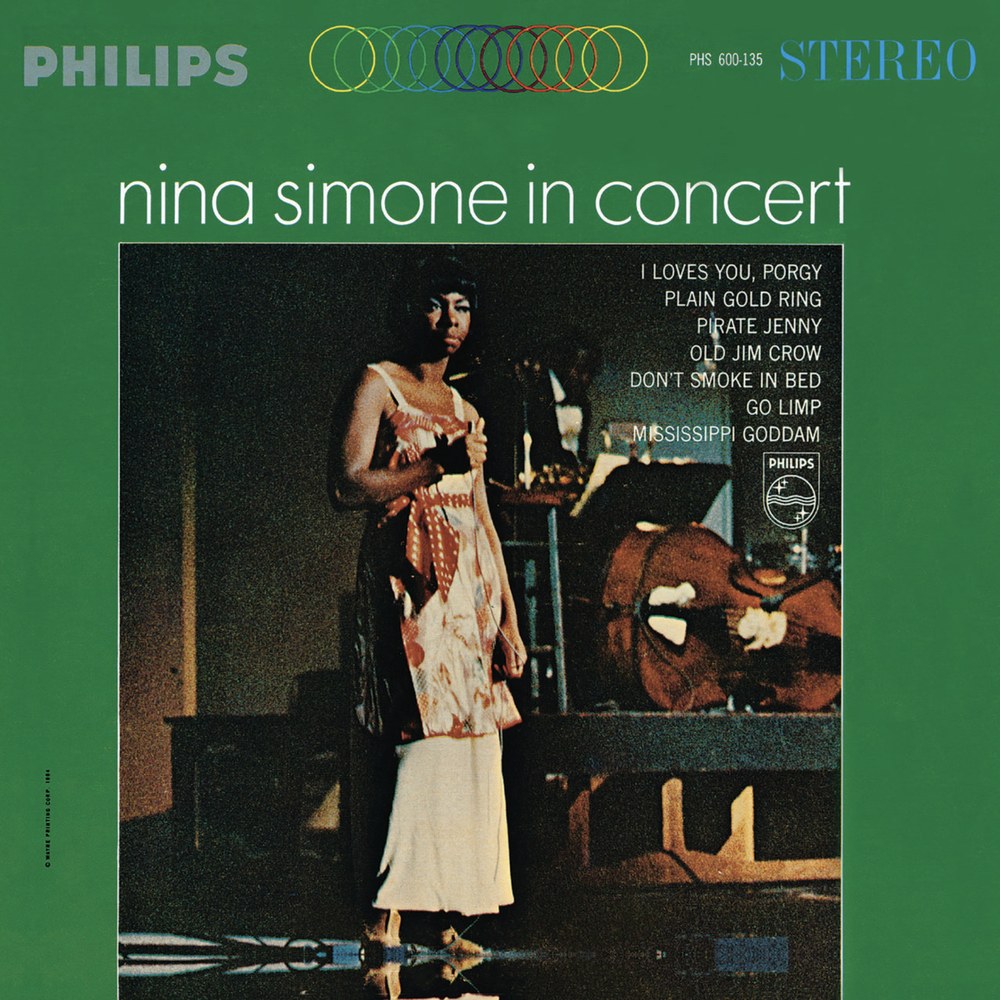
As a child, Nina refused to play after her parents were moved out of their front-row seats. Two decades later, on the album Nina Simone in Concert, she took to the piano her anger at the people who still told Black Americans where they could sit.
- Artist
- Nina Simone
- Album
- Nina Simone in Concert
- Year
- 1964
- Country
- USA
- Genre
- Jazz
- Reading time
- 5 min read
She wanted to play Bach in concert halls and ended up singing in the bars of Atlantic City. In 1964, at Carnegie Hall, she brought the two together in a protest.
01Before the first note
Eunice Kathleen Waymon was still a child when she got ready for a recital in Tryon, North Carolina. Her parents were sitting at the front, and they ended up having to give their seats to a white family. Seeing what was happening, she refused to play if the two of them had to stay at the back, and she demanded that they be allowed back to their seats.
The girl had practised for that moment. Her family was there to hear her. Taking the audience's attention while her parents were humiliated was not a condition she was willing to accept.
02Her inspiration had a name: Bach
Eunice wanted to be a concert pianist. She studied classical music and had a special devotion to Johann Sebastian Bach. In her autobiography she described being fascinated by music in which each note was linked to the next, and the playing of each one held up the whole. Once she understood Bach, she decided to give her life to the piano.
In 1950 she took a summer course at Juilliard in New York, preparing for an audition at the Curtis Institute of Music. Her family moved to Philadelphia to support her. She auditioned in 1951 and was turned down. Nina put the rejection down to racial prejudice, an explanation that teachers at the school denied. She kept studying in private lessons with Vladimir Sokoloff, who taught at Curtis itself.
That training would stay with her for her whole career. In "Love Me or Leave Me", recorded years later for her first album, Little Girl Blue, the piano lines seem to talk to each other: they follow their own paths, cross and answer one another. This is counterpoint, a way of combining melodies that Bach mastered. Even when she played a popular song, Nina found room for the music that had first won her over.
03To keep the job, she had to sing
In 1954 Eunice got work in a bar in Atlantic City to help pay for her piano lessons. But the job came with a condition: she also had to sing.
It was around then that she took the name Nina Simone. She wanted to hide the job from her mother, a Methodist preacher who disapproved of the songs she played.
In the bars she began to bring together everything she knew: the classical music of her studies, the gospel of the church and the songs she learned for her sets. The piano held that mix together, and her voice began to win people over.
Her first album, Little Girl Blue, included her recording of "I Loves You, Porgy", the song that would make her name. The young woman who had gone to the bars to pay for her studies was starting a career she had never planned.
04The revenge of the one who serves: Pirate Jenny
In 1964 Nina recorded the Carnegie Hall concerts that became the album Nina Simone in Concert. One of the tracks was "Pirate Jenny", a song by Bertolt Brecht and Kurt Weill from The Threepenny Opera.
The song tells the story of a woman who cleans rooms in a hotel, feels looked down on by the guests and keeps one fixed picture of revenge in her mind. In her imagination a ship comes into port, shells the town and takes its people prisoner. Then she is asked who should be left alive. The woman used to taking orders now decides everyone's fate.
In Nina's version, the hotel is in the American South. The change brings the story close to the lives of Black workers under segregation. Sung by her, the character's anger has a target listeners can recognise.
05Mississippi Goddam
The last track on the album is "Mississippi Goddam". It was written after the murder of the activist Medgar Evers in Mississippi and the bombing of a church in Alabama that killed four Black girls in September 1963.
To sing about these crimes, Nina chose a bright, upbeat rhythm, like a Broadway show tune. Introducing the song, she joked that it belonged to a show that had not been written yet. The audience laughed, before realising how serious things were about to get.
As the song goes on, the subject becomes impossible to avoid. Nina sings about fear, violence and promises that are never kept. She also takes on the advice to wait: to wait for rights, for safety, for freedom.
The piano keeps the song's pulse. The words strip away any comfort that rhythm might have offered.
In a 1964 interview, Nina said the record company had received a batch of broken records, sent back by people who thought the song was in bad taste.
06The place at the piano
On Nina Simone in Concert, the protest takes several forms: the story of "Pirate Jenny" moved to the American South, or a song about murders that arrives dressed as a show tune. Her command of the instrument lets Nina choose how to draw the audience in and when to confront it.
The girl from Tryon had refused to start a recital while her parents were being disrespected. At Carnegie Hall she starts. This time, the confrontation was inside the music.
Sources & References (16)
- 1.Ruth Feldstein, "'I Don't Trust You Anymore': Nina Simone, Culture, and Black Activism in the 1960s" (opens in a new tab). The Journal of American History, March 2005
- 2.Liz Fields, "How Nina Simone reinvented herself after a rejection from classical music conservatory" (opens in a new tab). PBS American Masters, 27 January 2021
- 3.Liz Fields, "The story behind Nina Simone's protest song, 'Mississippi Goddam'" (opens in a new tab). PBS American Masters, 14 January 2021
- 4."1933-1959" (opens in a new tab). Nina Simone official site, timeline
- 5."In Concert" (opens in a new tab). Nina Simone official site, album credits
- 6.Peter Dobrin, "Curtis and the case of Nina Simone" (opens in a new tab). The Philadelphia Inquirer, 14 August 2015
- 7."'Princess' Nina Simone: The Voice Of A Movement" (Nadine Cohodas interviewed by Tony Cox) (opens in a new tab). NPR, Talk of the Nation, 17 June 2010
- 8.Roger Thomas, "Nina Simone: how racism stopped her classical piano career in its tracks" (opens in a new tab). BBC Music Magazine, 8 April 2025
- 9.Nick Biro and Nat Shapiro, liner notes, Nina Simone in Concert (opens in a new tab). Philips PHM 200-135 / PHS 600-135, 1964 (original and later pressing)
- 10."She Changed The Sound: Nina Simone" (opens in a new tab). North Carolina Arts Council, 18 March 2019
- 11.Ayun Halliday, "Watch Nina Simone's Flawless Tribute to Johann Sebastian Bach on The Ed Sullivan Show (1960)" (opens in a new tab). Open Culture, 11 August 2023
- 12.Michèle Duguay, "Listening to Stylistic Hybridity in Nina Simone's 'Love Me Or Leave Me'" (opens in a new tab). Journal of the Society for American Music, 2024
- 13.Ian Lomax, "Nina Simone: Little Girl Blue" (opens in a new tab). Jazz Journal, 4 September 2022
- 14.Tom Maxwell, "A History of American Protest Music: When Nina Simone Sang What Everyone Was Thinking" (opens in a new tab). Longreads, 20 April 2017
- 15.Joe Hagan, "I Wish I Knew How It Would Feel to Be Free" (opens in a new tab). The Believer, July 2010
- 16.Victor Fiorillo, "Nina Simone's Complicated Relationship With Philadelphia" (opens in a new tab). Philadelphia Magazine, 11 May 2019
Spotted an error? Tell us →