Album StoryTrack 05
How Daft Punk turned childhood nostalgia into Discovery
Two French producers set out to make a record that sounded like the music they heard as children.
- Artist
- Daft Punk
- Album
- Discovery
- Year
- 2001
- Country
- France
- Genre
- Electronic / House
- Reading time
- 3 min read
In 1997 Daft Punk were the most talked-about act in French dance music. Four years later they released an album full of guitar solos, vocoder love songs and disco strings, sounds that many of their own fans had spent the late nineties dismissing as uncool.
01The context
Homework was made in a bedroom for the dancefloor. It was distorted, repetitive and deliberately rough. Its success made the duo the best-known names of the French Touch scene, which was known for filtered disco loops.
For the next album they looked back. In interviews they talked about the records they heard as children in the late seventies and early eighties, before they had opinions about which music was embarrassing. The aim of Discovery was to listen to music the way a child does, without irony.
02How the album was recorded
Recording took several years in Bangalter’s home studio in Paris, known as Daft House. The duo worked slowly and in private, building tracks from fragments of old records, their own playing and a collection of vintage synthesizers and effects units.
They blurred the line between sample and performance on purpose. Some passages that sound lifted from an old LP were played by the duo and then processed to sound old. Other parts use real samples from obscure funk, disco and soft rock records, cut up and rearranged.
03The unusual story
Discovery was planned as more than an album. Early on, the duo approached the Japanese manga artist Leiji Matsumoto, whose space operas they had watched on French television as children, to turn the record into an animated feature film.
The film, Interstella 5555: The 5tory of the 5ecret 5tar 5ystem, follows an alien band kidnapped by a music industry executive. It has almost no dialogue. The whole album plays from start to finish as its soundtrack, and several of the album’s music videos are excerpts from the film.
04Artwork and visual identity
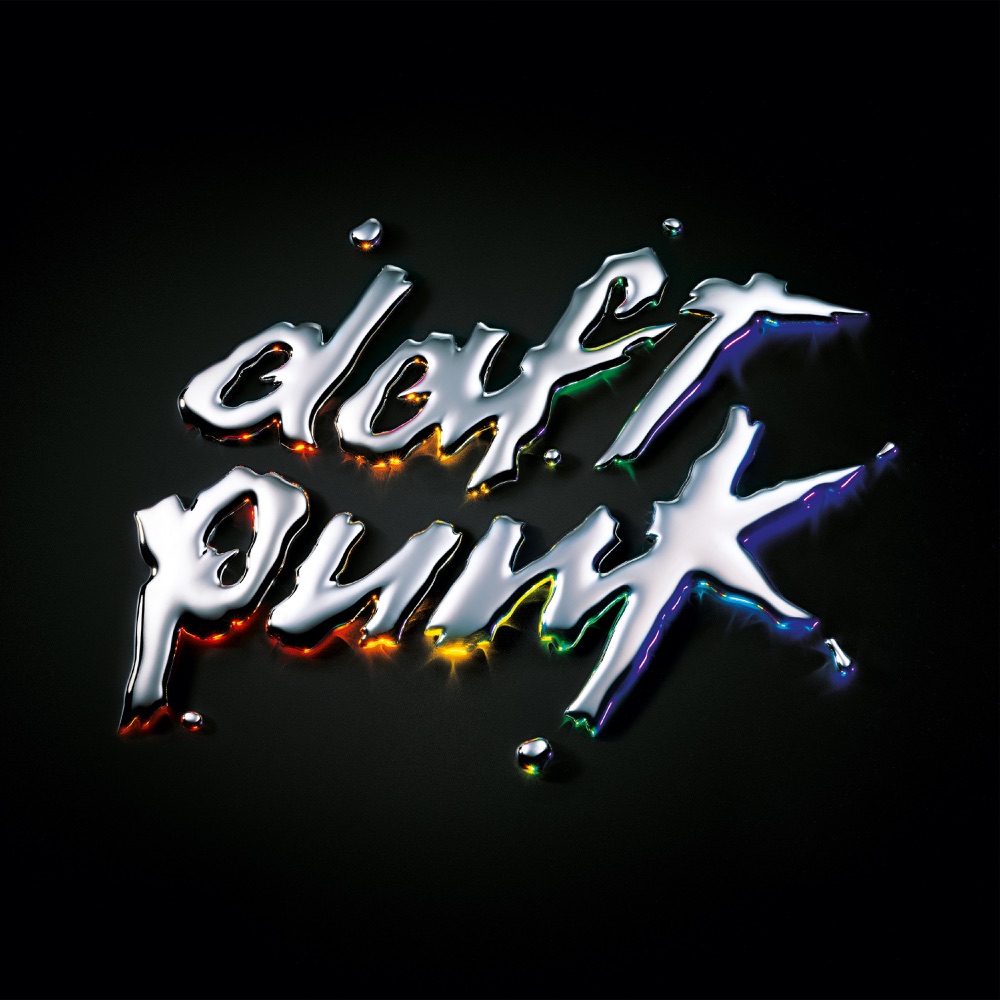
The cover swapped the satin jacket logo of Homework for a liquid chrome version of the Daft Punk name, somewhere between a heavy metal badge and a toy shop sticker. It was meant to look expensive and a little ridiculous.
This was also when the duo fully took on their robot personas. The helmets, designed with a team of special effects artists, let them appear as characters rather than celebrities and keep their private lives out of view.
05Hidden details
Early copies of the CD came with a “Daft Club” membership card that unlocked exclusive tracks online, years before streaming made that kind of fan access common.
The vocal on “One More Time” is by the American house singer Romanthony, heavily processed with Auto-Tune and vocoder. Many listeners took the robotic voice for a gimmick. It was one of the first high-profile uses of pitch correction as a creative effect.
06The album’s legacy
Reviews in 2001 were mixed. Some critics called Discovery kitsch, others a novelty. Within ten years it had become one of the most sampled and referenced records of its time, with a clear influence on the electropop and EDM that followed.
Kanye West built “Stronger” on “Harder, Better, Faster, Stronger”.
Sources & References
- 1.Daft Punk’s Discovery: The Future Unfurled (opens in a new tab). Ben Cardew, Velocity Press, 2021
- 2.Interstella 5555: The 5tory of the 5ecret 5tar 5ystem (opens in a new tab). Toei Animation / Virgin, 2003
- 3.Discovery, original CD liner notes and Daft Club materials (opens in a new tab). Virgin Records, 2001
Spotted an error? Tell us →