Album StoryTrack 07
Camarón plugged flamenco in, and almost nobody wanted to listen
Camarón swapped voice, guitar and handclaps for drums, bass, keyboards and a sitar. The record sold poorly. Today it tops El País’s list of the best Spanish albums since 1975.
- Artist
- Camarón
- Album
- La leyenda del tiempo
- Year
- 1979
- Country
- Spain
- Genre
- Flamenco
- Reading time
- 3 min read
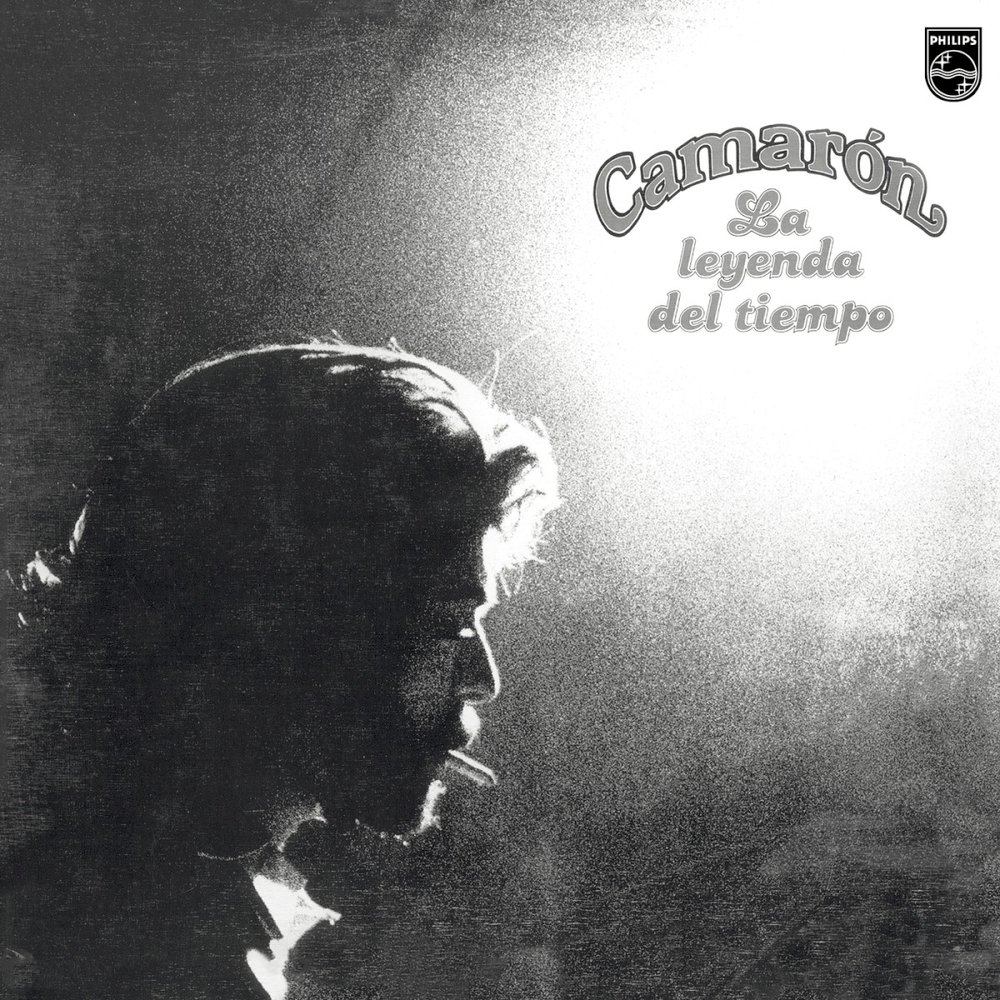
By 1979 Camarón had made nine records with Paco de Lucía, and all of them followed the same flamenco recipe: voice, guitar and handclaps. On the sleeve of his next album even his name changed. The “de la Isla” was gone, and it said only “Camarón”.
01How it used to be
Camarón was born José Monge Cruz in San Fernando, in the province of Cádiz, in 1950. Ricardo Pachón, a producer from Seville, recalled that Camarón’s earlier records were made in a small room on a four track machine, with the voice, one or two guitars and handclaps.
02The break
According to Rockdelux, Camarón ended his contract with the producer Antonio Sánchez, Paco de Lucía’s father, in 1977. Pachón won him over and surrounded him with his own circle of musicians.
Pachón said he asked Philips for its big studio in Madrid. First, the songs were worked up over several weeks at his house in Umbrete, near Seville. According to Pachón, Paco de Lucía agreed to play guitar, then pulled out a few days later. The guitar parts went to Tomatito and Raimundo Amador, who said in 2009 that he spent his honeymoon in Umbrete working on the album.
Everything else was new too. Instead of traditional verses, the album sets poems by Federico García Lorca and Fernando Villalón to music by Pachón. “Viejo mundo” sets a poem by Omar Khayyam to music by Kiko Veneno, who also wrote “Volando voy”.
Around Camarón’s voice came electric guitar, electric bass, drums, Manolo Marinelli’s keyboards, Jorge Pardo’s flute and Rubem Dantas on percussion. On the lullaby that closes the album, Gualberto, formerly of the band Smash, plays a sitar, and a synthesiser fades out the title track. Writing in El País in 2012, Pachón put it simply: “Everything was new for him.”
03How it was received
The reaction was cold. The record sold poorly and was met with indifference or rejection. Pachón and Tomatito both later recalled that buyers took copies back to the shops, saying it was not Camarón, or not flamenco.
Even Tomatito had doubts. Speaking to reporters in Barcelona in 2009, as reported by Público, he said that while they were recording he thought it was a strange and ugly record. Camarón himself pulled back. In the same 2012 piece, Pachón wrote that the singer asked him for a next record of just guitar and handclaps.
04The album’s legacy
Over time the verdict changed. In 2004 the Spanish magazine Rockdelux ranked La leyenda del tiempo second among the 100 best Spanish albums of the 20th century. In 2025 Babelia, the culture supplement of El País, put it first in its list of the 50 best Spanish albums since 1975, chosen by a panel of 41 critics and journalists. The 2009 documentary Tiempo de leyenda, directed by José Sánchez-Montes, tells the story of the record.
Camarón died in 1992. Ricardo Pachón died in Seville on 19 August 2026.
Sources & References (9)
- 1.Vida de una leyenda (opens in a new tab). Ricardo Pachón, El País (Babelia), 2012 (press scan)
- 2.Cuando Camarón descubrió el rock (opens in a new tab). Diego A. Manrique, El País, 2013 (press scan)
- 3.Camarón: La leyenda del tiempo (opens in a new tab). Àlex D’Averc, Rockdelux, 2004
- 4.La leyenda de un disco ‘raro y feo’ (opens in a new tab). Lídia Penelo, Público, 2009
- 5.Camarón se hizo leyenda (opens in a new tab). Daniel Pérez, La Voz de Cádiz, 2009 (copy)
- 6.Los 50 mejores discos españoles del último medio siglo (opens in a new tab). El País, Babelia, 2025
- 7.Fallece Ricardo Pachón, productor del disco ‘La Leyenda del Tiempo’ de Camarón (opens in a new tab). Europa Press, via Público, 2026
- 8.Muere Ricardo Pachón, productor de leyendas del ‘nuevo flamenco’ (opens in a new tab). Nel Gómez, Infobae, 2026
- 9.Camarón, La Leyenda Del Tiempo (Philips, 1979, credits) (opens in a new tab). Discogs
Spotted an error? Tell us →